Custom hardware and a fixed operator station
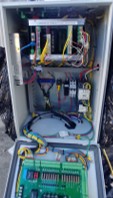
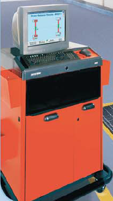
Separate control, display, and database equipment created more failure points. Custom boards, worn cables, and old software made replacement and troubleshooting increasingly difficult.
SUCCESS STORY
VIS-CHECK CONTROL PLATFORM REDESIGN
AoTSource and Bosch Rexroth reengineered the controls behind a proven heavy-vehicle inspection machine—modernizing its interface, data, and serviceability while preserving the mechanical system that already worked.
THE CUSTOMER CHALLENGE
The Machine Builder's late-1990s control architecture depended on custom electronic boards, a wired hand controller, a separate desktop PC and database, and firmware tied to antiquated software and an old version of Windows. As cables and peripherals wore out—and replacement components became harder to source—repairs grew longer and the risk of field downtime increased.
THE TRANSFORMATION
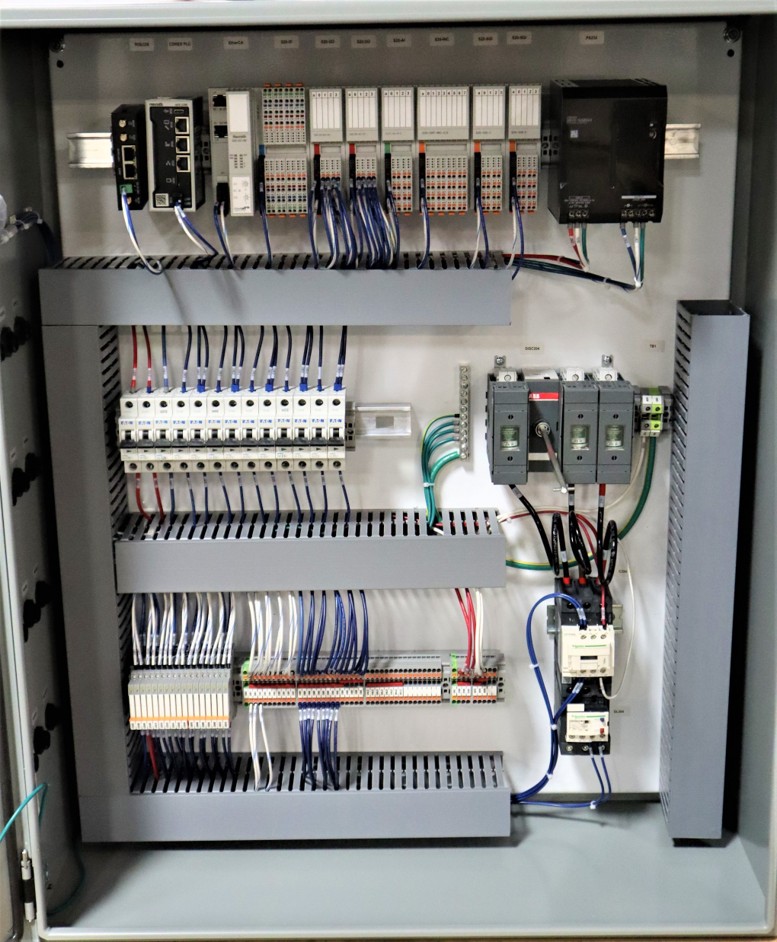
The two systems tell the story: a custom, difficult-to-support control stack was replaced by a clean, documented enclosure and a modern operator experience that is no longer tied to one proprietary screen or PC.
Separate control, display, and database equipment created more failure points. Custom boards, worn cables, and old software made replacement and troubleshooting increasingly difficult.
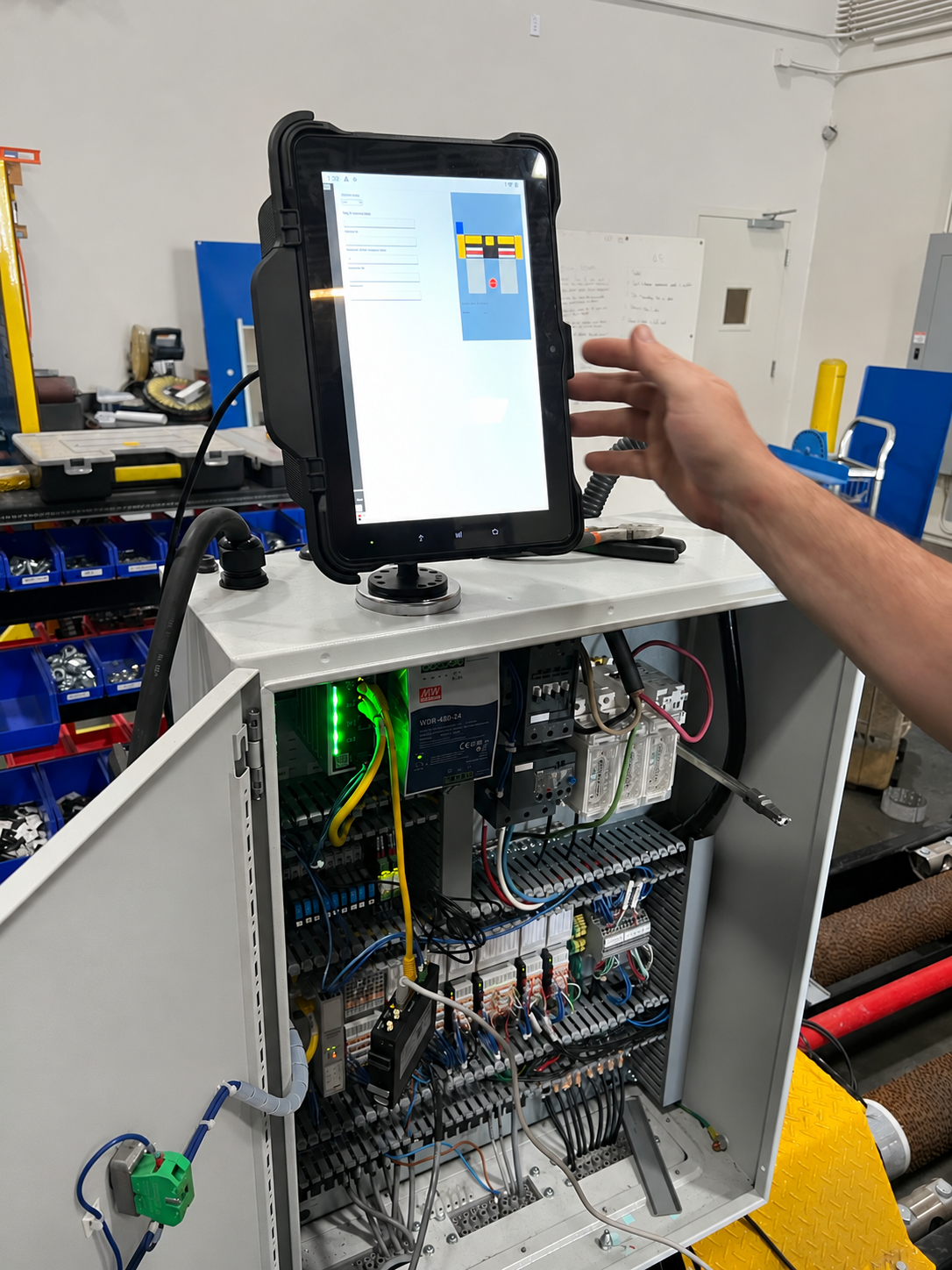
One Linux-Based PC now hosts the PLC, Web HMI, and database applications. Operators can control the test, view results, and print reports through a web-capable device.
WHAT CHANGED
Modernization was not limited to replacing a PLC. The new architecture changed how the machine is operated, supported, connected, and expanded.
PLC control, the Web HMI, and database functions were consolidated on a single compact Linux-Based PC instead of separate systems.
The fixed push-button station gave way to a graphical interface accessible from a tablet, phone, or other internet-capable touchscreen.
Operators can run the test, view results, and print reports wirelessly. If one handheld device fails, another can take its place.
WLAN printing, OPC UA data transfer, and a Linux-based control platform replaced a closed, Windows-dependent technology stack.
HOW THE UPGRADE HELPED
The redesign removed the machine's dependency on fragile, one-off electronics and a single operator device. It gave the customer a supportable product architecture, made field recovery easier, and created room for new connectivity and features without starting over.
A failed tablet no longer stops the machine; the web interface can be opened on another compatible device.
Current, documented components replace aging custom boards, fragile cables, and software tied to an obsolete Windows environment.
Consolidating the controller, HMI, and database reduced the hardware footprint and kept the new system within a similarly sized enclosure.
The open, hardware-independent platform can accept new functionality and data capabilities without another complete controls redesign.
MODERNIZE WITHOUT REPLACING THE MACHINE